
Blooming
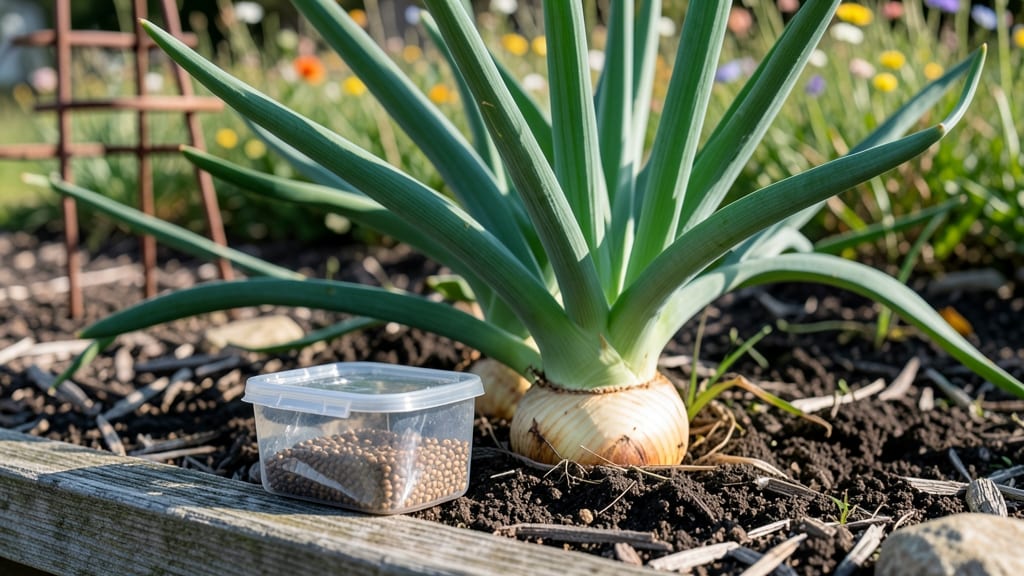
Onion seeds last about 2-3 years at their peak germination rate, but their viability starts declining noticeably after 2 years due to drying out and natural chemical breakdown. Proper storage is key to keeping them usable longer.
Understanding why onion seeds lose their potency helps you maximize their lifespan. 🌱 The seed's hard outer shell protects it, but over time, moisture escapes and internal enzymes weaken, reducing the chance of sprouting.
After two years, germination rates can drop by 30-50%, meaning fewer plants will grow even if you plant them correctly. I've seen gardeners extend seed life by storing them in airtight containers with silica gel packets, which keeps humidity low and slows deterioration.
For best results, store seeds in a cool, dark place—like a refrigerator or basement—where temperatures stay between 35-45°F. Freezing isn't necessary unless you're saving seeds for more than three years, as the cold can actually accelerate moisture loss in some cases.
Always label your containers with the date so you can track freshness. Testing a few seeds in damp paper towels before planting is a simple way to check viability—if they sprout within a week, they're still good to go.
💡 In This Article
- Why Onion Seed Germination Declines Over Time
- Best Storage Methods to Preserve Onion Seed Freshness
Why onion seed germination declines over time
The decline in onion seed viability begins with moisture loss, which is the seed's primary enemy. Onion seeds contain about 8-10% moisture content when fresh, but this evaporates over time—especially if stored improperly.
When moisture drops below 5-6%, the seed's internal enzymes start breaking down, reducing their ability to trigger germination. This process accelerates in warm or humid conditions, where seeds can lose viability 3-4 times faster than in cool, dry environments.
The seed coat itself plays a critical role in this decline. Over time, it hardens and becomes more impermeable, making it harder for water to penetrate during planting. This hardening is a natural defense mechanism, but it backfires when seeds are stored too long—even if moisture levels are ideal.
Studies show that after 2 years, up to 40% of onion seeds fail to sprout due to this coat hardening alone. The combination of moisture loss and coat changes explains why germination rates plummet after the 2-year mark. 🌱
Enzyme degradation is another key factor. Onion seeds rely on enzymes like amylase and protease to break down stored nutrients during germination. These enzymes degrade over time, especially if exposed to heat or light.
After 3 years, enzyme activity can drop by 50% or more, meaning even if seeds absorb water, they lack the energy to sprout. This is why older seeds often produce weak, stunted seedlings rather than healthy plants.
Temperature fluctuations also speed up deterioration. Seeds stored in room-temperature conditions (75°F+) degrade 2-3 times faster than those kept in a cool cellar (40°F). The heat causes chemical reactions that accelerate enzyme breakdown and moisture evaporation.
Even brief exposure to warmth—like leaving seeds in a sunny window—can reduce their lifespan by months. This is why professional seed banks use freeze-dried storage at -18°C (0°F) to preserve viability for decades.
Light exposure is another silent killer. Onion seeds contain pigments that react to light, triggering premature aging. Storing them in opaque containers blocks this light damage, which can otherwise reduce germination by 15-25% over a year.
The best containers are airtight and lightproof, like glass jars with rubber seals or Mylar bags with oxygen absorbers. These create a stable microclimate that slows all three deterioration factors: moisture loss, enzyme breakdown, and coat hardening.
What most gardeners don't realize is that even properly stored seeds experience a 10% annual viability loss just from natural aging. This is why seed packets often have "best by" dates—they're not arbitrary.
For example, a packet labeled for 2024 planting might have been harvested in 2022, giving you a 2-year window before germination drops below 85%. Testing a small batch before planting can save you from wasting an entire season's worth of seeds.