
Lawn
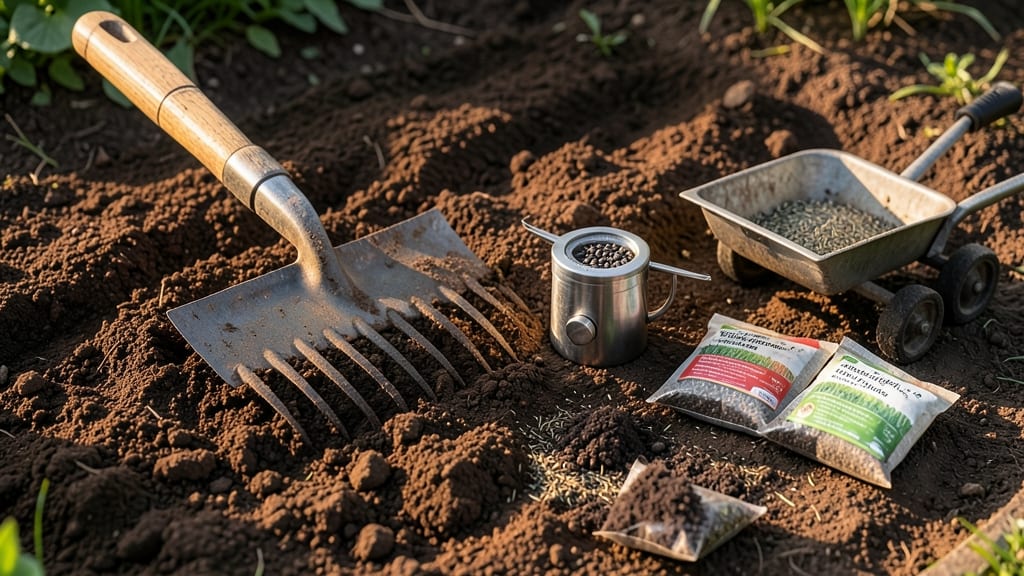
Autumn grass seed is your secret weapon for a lush spring lawn—cold stratification does half the work for you while you sleep. 🌱 I learned this the hard way after planting in spring and watching my seeds bake in the sun before they could take root.
The key window is 6-8 weeks before your first frost, when soil stays warm enough for germination but nights cool down to protect tender seedlings.
Start with a soil test to check pH and nutrients—most grasses thrive in 6.0-7.0 range. Loosen the top 4-6 inches of soil with a rake or aerator, then spread seed evenly at the rate on your packet (usually 5-12 lbs per 1,000 sq ft).
Lightly rake it in just enough to cover, then water gently but thoroughly—think "damp sponge," not soggy swamp. The goal is to keep seeds consistently moist until germination.
What you’ll end up with is a thick, uniform stand of grass that outcompetes weeds from day one. Unlike spring planting, autumn seeds establish roots before winter dormancy, so they bounce back stronger in spring.
Plus, cooler temps mean less water evaporation—your hose visits drop from daily to every other day once germination starts.
Regional tweaks matter: In cooler zones (5-7), aim for September planting; in warmer zones (8-10), stretch to October-November. Just avoid seeding when frost is forecast within 7-10 days.
The payoff? A lawn that greens up 2-3 weeks earlier than neighbors who planted in spring—and stays that way all season.
📚 In This Guide
- What you need
- Instructions
- Tips and common mistakes
- Wrapping up and next steps
What you need
- ● Grass seed: Choose a cold-hardy variety (e.g., fescue, ryegrass, or bluegrass) suited to your climate. Aim for 10–15 lbs per 1,000 sq ft for new lawns or 5–8 lbs for overseeding.
- ● Lawn fertilizer: A high-phosphorus blend (e.g., 10-20-10 ratio) to promote root growth. Use ½–1 lb of nitrogen per 1,000 sq ft.
- ● Soil tester kit: Check pH levels (ideal: 6.0–7.0) before seeding.
- ● Rake: A bow rake (for leveling soil) and a garden rake (for removing debris).
- ● Broadcast spreader: For even seed distribution (manual or walk-behind models work).
- ● Water source: Hose with a fine-mist nozzle or a sprinkler (oscillating or rotary).
- ● Straw or peat moss: ¼–½ inch layer to protect seeds from birds and erosion.
- ● Soil amendment: Compost or sand to improve drainage in heavy clay soils.
- ● Pre-emergent herbicide: Apply 4–6 weeks before seeding to prevent weeds (if needed).
- ● Lawn roller: Lightweight (50–100 lbs) to press seed into soil.
- ● Seed germination blanket: Biodegradable fabric to retain moisture in dry climates.
- ● Garden gloves & knee pads: For comfort during prep and planting.
- ● Weather tracker app: Monitor forecasts to time planting for optimal conditions.
How to plant grass seed in autumn for spring success
Fall is the perfect time to plant grass seed—here's how to set up your lawn for lush spring growth.
🌱 Step 1: Prepare the Soil for Optimal Seed Contact
Start by mowing your lawn as short as possible—about 1 inch—to create an open canvas for seeds. Remove any debris, leaves, or thatch that might block seed-to-soil contact. I use a stiff rake to loosen the top ¼ inch of soil, which helps seeds make direct contact with moisture and nutrients.
The goal is to create a slightly rough surface—like a golf green—that won't let seeds roll away when you spread them. If your soil is compacted, consider renting a core aerator to create small holes; this lets seeds settle deeper and encourages root growth. Water the area lightly before seeding to help soil particles stick together and prevent erosion when you spread.
🌿 Step 2: Choose and Spread Grass Seed Strategically
Select a grass seed blend suited to your climate and sunlight conditions—cool-season grasses like Kentucky bluegrass or fescue thrive when planted in fall. For a 4,000 sq ft lawn, you'll need about 8-10 pounds of seed. I like to use a broadcast spreader for even coverage, walking in overlapping passes to avoid thin spots.
Spread half the seed in one direction, then the other half perpendicular to the first. This crisscross pattern ensures full coverage without over-seeding in any one spot. Lightly rake the area again to press seeds into the soil—just enough so they don't blow away, but not so deep they struggle to emerge. The seed should be no more than ¼ inch below the surface.
💧 Step 3: Water Immediately and Maintain Moisture
Water the seeded area thoroughly right after planting—aim for ½ inch of water to settle seeds and activate germination. After the initial watering, keep the soil consistently moist but not soggy. I set a reminder to water lightly twice daily for the first 2 weeks, using a sprinkler that delivers a fine mist rather than a heavy stream.
You'll know you're doing it right when the top ½ inch of soil stays damp but doesn't form puddles. Avoid walking on the area until you see 2-3 inches of new growth, which usually takes 3-4 weeks. Overwatering can wash away seeds or cause them to rot before they sprout, so check the soil daily with your finger—it should feel like a damp sponge.
☀️ Step 4: Protect New Growth Through Winter
Once seedlings emerge, reduce watering to once daily unless temperatures drop below 40°F at night. Cold stratification—nature's way of preparing seeds for spring—will happen naturally over winter, but you can give your lawn a boost by applying a thin layer of ¼ inch of compost after the first mowing.
Leave the grass slightly taller than usual during winter—about 2-3 inches—to protect new roots from freezing temperatures. If snow covers the area, it actually helps by insulating the soil and providing extra moisture. By late winter, you'll notice the new grass turning a deeper green as it prepares for spring's warmer days.
⏰ Step 5: First Spring Mowing and Maintenance
When new growth reaches 3-4 inches tall in spring, it's time for the first mow. Set your mower blade to 3 inches to encourage deep root systems. Never remove more than ⅓ of the blade height at once—this prevents stress and promotes healthy growth. I always mow when the grass is dry to avoid clumping and disease.
Fertilize lightly with a high-nitrogen, slow-release formula after the first mowing to support rapid growth. Continue watering 1 inch per week, either from rainfall or irrigation, and adjust mowing height gradually as the season progresses. By following these steps, your autumn-planted grass will outperform spring-seeded lawns every time.
Tips & tricks for perfect autumn grass seed planting
Fall planting sets the stage for spring success—here's how to avoid common pitfalls and maximize your lawn's potential.
Soil Prep Secret: After mowing to 1 inch in Step 1, take an extra 5 minutes to run your hand over the soil. You're aiming for a texture like a golf green—rough enough to grip seeds but not so compacted they can't breathe. If your soil feels like packing dirt, rent a core aerator for just 10 minutes. This creates tiny pockets where seeds can nestle deeper, giving them better access to moisture during winter's chill.
Seed Distribution Pro Tip: When spreading those 8-10 pounds of seed in Step 2, walk in a "W" pattern instead of straight lines. This ensures you don't miss spots or double up in one area. For large lawns, divide the area into quadrants and tackle one at a time. Lightly raking after spreading (just enough to press seeds into soil) prevents wind from stealing your hard work—think of it as giving each seed a tiny blanket.
Watering Wisdom: That twice-daily watering in Step 3 is critical, but timing matters more than you'd think. Water in the early morning (before 9 AM) to let soil dry slightly during the day, preventing fungal growth. Use a rain gauge or tuna can to measure your ½ inch of water—your sprinkler might be delivering twice that amount! The "damp sponge" test is your best friend: if water pools on the surface, you're overdoing it.
Winter Protection Hack: When temperatures drop below 40°F at night in Step 4, consider laying down a thin layer of straw (not hay—it can mat down) over seeded areas. This acts like a natural blanket, protecting tender seedlings from freezing winds. Remove it in early spring when new growth appears. The compost layer you add after first mowing? Sprinkle it lightly over the entire area, not just where you see grass—those hidden seeds will thank you.
Pro Tips for Grass Seed Autumn
- Fall planting sets the stage for spring success—here's how to avoid common pitfalls and maximize your lawn's potential.
- Soil Prep Secret: After mowing to 1 inch in Step 1, take an extra 5 minutes to run your hand over the soil.
- Seed Distribution Pro Tip: When spreading those 8-10 pounds of seed in Step 2, walk in a "W" pattern instead of straight lines.
Frequently asked questions
Got questions about timing, prep, or troubleshooting your grass seed autumn project? You’re not alone! Here are answers to the most common queries to help you sow with confidence.
When is the exact best time to plant grass seed in autumn?
The ideal window is 4–6 weeks before your first hard frost—typically late September to early October in most U.S. regions. This gives seeds time to germinate, establish roots, and harden off before winter. Check your USDA Plant Hardiness Zone for local precision.
Will grass seed still grow if planted too late in autumn?
Yes, but with caveats! Seeds planted after frost may struggle to germinate or survive winter. If you miss the window, opt for winter-hardy varieties (like fescue) or wait until early spring—just be prepared for slower establishment and potential weed competition.
Can I overseed an existing lawn in autumn, or do I need to reseed bare spots?
Both work! For overseeding, mow low (1–1.5 inches), rake out debris, and spread seed evenly. For bare patches, loosen soil with a rake or core aerator first. Pro tip: Use a slit seeder for precision in high-traffic areas.
How do I protect new grass seed from pests (like birds, squirrels, or insects) in autumn?
Start with a light topdressing of compost or straw (¼ inch) to deter birds and retain moisture. For insects (like grubs), apply a pre-emergent insecticide before seeding. Avoid heavy mulch—it can suffocate seeds.
What’s the deal with “cold stratification”? Do I need to do anything special?
Cold stratification is nature’s way of prepping seeds for spring—autumn planting does this automatically! Just ensure seeds stay moist but not waterlogged during winter. If sowing in containers, move them to a garage or unheated shed to mimic outdoor temps.
Pro Tip:
Need a quick check? Press a seed into your palm—if it cracks easily, it’s fresh and ready to plant! Old seeds (over 1 year) may need a viability test (soak in water; sinkers = good).
Wrapping up and next steps
Autumn is the perfect time to prepare your lawn for a lush spring revival—thanks to cold-stratified grass seed! By following the right steps, you’ll ensure strong roots, vibrant growth, and a healthier lawn come spring. 🌱
Now that you’re armed with the know-how, take action! Grab your supplies, pick the right seed mix, and give your lawn the care it deserves. Start small, stay consistent, and watch your efforts bloom into a stunning spring green. Happy seeding!