
Lawn
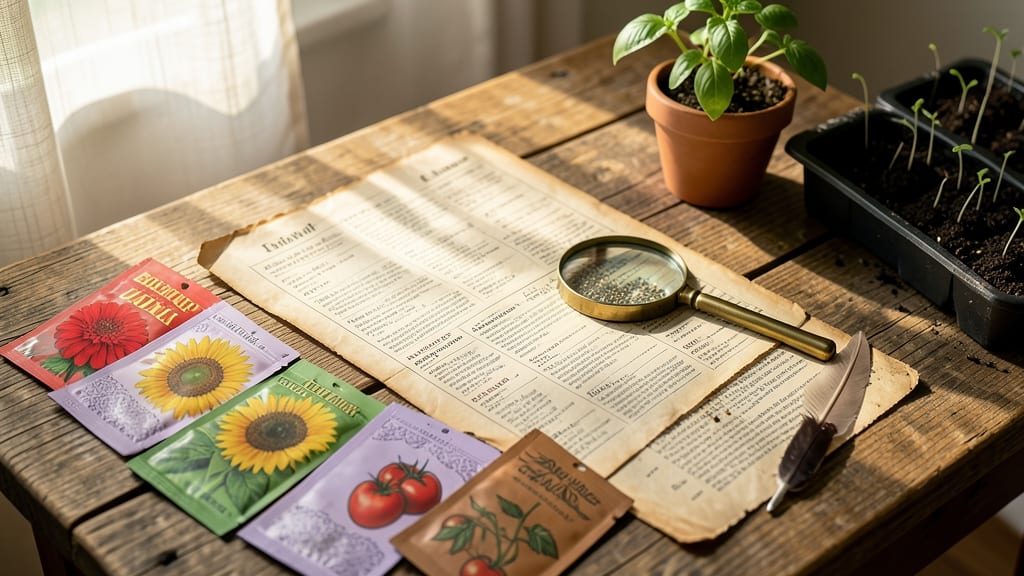
Flipping through garden seed catalogs in January feels like opening a door to summer. 🌱 These colorful pages hold the key to your garden's future—whether you dream of towering sunflowers or a table overflowing with heirloom tomatoes.
The best catalogs don't just list seeds; they tell stories about varieties that thrive in your climate, with details that help you pick winners for your space and goals.
Start by scanning for seasonal planting guides that match your zone—some catalogs include frost charts and succession planting tips that save you from guessing. I always look for beginner-friendly labels and disease-resistant varieties first, since those cut down on frustration.
The photos and descriptions reveal so much: whether a tomato is crack-resistant, a flower attracts pollinators, or a pepper stays productive in heat.
What you'll end up with is a personalized planting plan that accounts for your yard's sunlight, your family's favorite flavors, and even your kids' enthusiasm for picking.
The right catalog becomes your garden's blueprint, with varieties that grow reliably where you live and harvests that feel like rewards for your efforts.
Pro tip: Bookmark catalogs early—some sell out by March, and the best varieties get snapped up fast. Whether you're a first-timer or a seasoned grower, these catalogs turn vague dreams into a clear, exciting to-do list for the season ahead.
📚 In This Guide
- What you need
- Instructions
- Tips and common mistakes
- Wrapping up and next steps
What you need
- ● Seed Catalogs: 2–5 high-quality catalogs (e.g., Burpee, Park Seed, or local nurseries) to compare varieties and climates.
- ● Notebook & Pen: 1 for tracking orders, deadlines, and planting schedules.
- ● Measuring Tape: 1 (16 ft. or longer) to plan garden layouts.
- ● Garden Gloves: 1 pair (water-resistant, breathable fabric).
- ● Pruning Shears: 1 pair (bypass blades for clean cuts).
- ○ Soil Test Kit: 1 (optional but recommended for pH/fertility analysis).
- ● Seed Starting Trays: 5–10 (biodegradable or plastic, with drainage holes).
- ● Grow Lights: 1–2 LED lights (for indoor seed starting).
- ● Compost: 1–2 bags (for enriching soil).
- ● Garden Journal: 1 (to log plant progress and notes).
- ● Rain Gauge: 1 (to monitor moisture levels).
How to choose and use garden seed catalogs for a thriving garden
Seasonal seed catalogs are your roadmap to a garden bursting with color and productivity—here's how to navigate them like a pro.
🌱 Step 1: Identify Your Growing Zone and Seasonal Needs
Start by pinpointing your USDA hardiness zone—this determines which seeds will thrive in your climate. Most catalogs list zone ranges next to each variety, so cross-reference with your location to avoid planting seeds that won’t survive your winters or summers. For example, tender annuals like basil thrive in zones 8-11, while hardy perennials like lavender prefer zones 5-9.
Next, align your selections with your planting season. Catalogs often categorize seeds by "cool season" (think lettuce, peas) or "warm season" (tomatoes, peppers) crops. Pro tip: Note your last frost date—most catalogs provide planting schedules based on this critical marker. If you're in a short-season area, prioritize fast-maturing varieties labeled "early harvest" or "quick-maturing."
☀️ Step 2: Compare Varieties and Select for Your Garden’s Purpose
Seed catalogs offer an overwhelming array of choices, so narrow your focus by garden goals. Are you growing for cut flowers? Look for varieties labeled "long-stemmed" or "disease-resistant" like 'Sweet Sultan' snapdragons. Aiming for a bountiful harvest? Choose heirloom tomatoes like 'Brandywine' or hybrid varieties touted for "high yield" in your zone. Catalogs often include mature plant height and spread, so sketch your garden layout beforehand to avoid overcrowding.
Pay attention to disease resistance codes (like "V" for verticillium wilt or "F" for fusarium) if your area has known soil-borne issues. I always cross-check these with my local extension service’s pest reports—sometimes a catalog’s claims don’t match real-world conditions. For instance, 'Celebrity' tomatoes resist cracking, but in humid climates, you might need to supplement with additional fungal resistance.
📝 Step 3: Calculate Seed Quantities and Budget Wisely
Catalogs list seed quantities per packet, but don’t assume one packet will suffice. For example, a packet of marigold seeds might yield 50 plants, but if you’re planting a 10-foot border, you’ll need 5-6 packets for continuous coverage. Use the "square foot gardening" method as a guide: most vegetables need 1-4 plants per square foot, while flowers can range from 4-9 plants per square foot depending on variety. I like to highlight the quantity needed in my garden planner before ordering.
Watch for bulk seed discounts—some catalogs offer savings when you buy 10+ packets of the same variety. Also, note whether seeds are treated (often marked with "neo" or "max" for fungicide coatings) or organic. Treated seeds may have longer shelf lives but aren’t suitable for organic gardens. Finally, factor in shipping costs—some catalogs waive fees over a certain order total, while others offer free shipping on all orders.
⏰ Step 4: Order Early and Plan for Storage
Popular varieties sell out fast, so place orders 6-8 weeks before your catalog’s shipping deadline—especially for heirlooms or rare seeds. Most catalogs ship in waves, with early orders arriving first. I set calendar reminders for order deadlines and estimated arrival dates to avoid last-minute scrambles. Pro tip: If you’re ordering multiple catalogs, check for duplicate varieties—some seeds appear in several catalogs, so you might not need to buy the same tomato variety twice.
Store unopened seed packets in a cool, dark, dry place (like a pantry) until planting time. Once opened, transfer seeds to airtight containers with silica gel packets to extend viability. Label each container with the variety name, year, and germination date—seeds lose potency over time, and catalogs often list germination rates (e.g., "90% after 2 years"). For long-term storage, refrigerate seeds in sealed bags with a desiccant packet to prevent moisture damage.
🌿 Step 5: Organize and Reference Your Catalog Selections
After ordering, create a planting schedule using the catalog’s recommended dates. I like to transfer key details—like days to maturity, light requirements, and spacing—into a spreadsheet. For example, 'Sugar Snap' peas mature in 60 days and need 2-3 inches of space, while 'Black Krim' tomatoes take 80 days and require 18-24 inches of space. Color-code by season (cool vs. warm) to visualize your garden’s progression.
Keep your catalogs handy for troubleshooting—many include common pests/diseases and cultural tips specific to each variety. For instance, if your 'Zinnias' develop powdery mildew, the catalog might suggest spacing plants 6-12 inches apart for better airflow. I dog-ear pages for my top picks and circle notable traits like "self-cleaning" (for okra) or "prolific bloomer" (for zinnias). This reference system saves time when issues arise mid-season.
Tips & tricks for mastering seasonal seed catalogs
Real talk: Seed catalogs can feel overwhelming at first—here's how to cut through the noise and make every selection count.
Zone-Specific Selection: Don't just rely on the catalog's zone recommendations—verify them with your local agricultural extension office. Some catalogs use slightly different zone maps, and microclimates (like urban heat islands) can shift zones by 1-2 numbers. For example, if you're on the border of zones 6 and 7, I recommend erring toward the lower zone for cool-season crops and the higher zone for warm-season varieties. This buffer accounts for those unpredictable spring frosts or late summer heatwaves that can sneak up on gardeners.
Catalog Cross-Referencing: Here's what nobody tells you—many popular varieties appear in multiple catalogs. Before ordering, compare descriptions for subtle differences: one catalog might highlight "disease resistance" while another emphasizes "early maturity." I've found that 'Early Girl' tomatoes described in one catalog as "crack-resistant" were actually prone to splitting in my humid climate, while the same variety in another catalog noted "needs consistent moisture." These details can mean the difference between success and disappointment.
Storage Strategy: That cool, dark, dry place mentioned in instructions? It's not just about preventing moisture—temperature fluctuations are the real enemy. I store my seed packets in a sealed container with a silica gel packet inside a ziplock bag, then place the whole thing in my fridge. This creates a stable environment that preserves viability for years. For seeds you plan to use within a season, a simple mason jar with the lid loosely screwed on works perfectly—it keeps out pests while allowing airflow.
Budget Optimization: The bulk discounts catalogs advertise can be tempting, but here's the smarter approach: calculate your actual needs first. For example, if you're planting a 4' x 8' raised bed with 12" spacing between tomato plants, you'll need about 32 plants—not the 50 a single packet might yield. I always create a quick sketch of my garden layout and mark each variety's requirements before ordering. This prevents impulse buys of seeds you'll never use, which is how seed stashes grow faster than gardens.
Pro Tips for Garden Seed Catalogs
- Real talk: Seed catalogs can feel overwhelming at first—here's how to cut through the noise and make every selection count.
- Zone-Specific Selection: Don't just rely on the catalog's zone recommendations—verify them with your local agricultural extension office.
- Catalog Cross-Referencing: Here's what nobody tells you—many popular varieties appear in multiple catalogs.
Frequently asked questions
Got questions about navigating garden seed catalogs? We’ve got answers to help you pick the perfect seeds for your green thumb!
When is the best time to order seeds from a catalog?
Timing depends on your climate and what you’re growing! For cool-season crops (like lettuce or spinach), order in early spring (2-3 months before last frost). For warm-season crops (tomatoes, peppers), place orders in late winter or early spring (8-10 weeks before transplanting). Always check the catalog’s recommended planting dates!
Are seed catalogs more expensive than buying seeds locally?
Not always! Catalogs often offer bulk discounts, heirloom varieties, and rare seeds you won’t find at big-box stores. Compare prices per seed packet—sometimes catalogs are cheaper, especially for specialty or organic seeds. Pro tip: Look for coupons or loyalty programs from your favorite catalogs!
How do I know which seeds will grow best in my climate?
Most catalogs include USDA hardiness zone maps or growing guides. Check the seed packet’s “days to maturity” and “planting zone” notes. For extra help, use the catalog’s zone finder tool or enter your ZIP code on sites like PlantMaps to see what thrives in your area.
Can I save seeds from catalog-bought plants for next year?
Yes—but with a few caveats! Heirloom and open-pollinated seeds can be saved and replanted. Hybrid seeds (often labeled “F1”) may not produce true-to-type plants. Store seeds in a cool, dry place (like a sealed container) for up to 5 years. Pro tip: Label everything with the variety and date!
What if my seed order arrives late or gets damaged?
Reputable catalogs usually have shipping guarantees (e.g., “on-time delivery or free replacement”). If seeds arrive damaged, contact customer service immediately—most will refund or reship. Always track your order and photograph damaged packages before replying. Pro tip: Order early to avoid last-minute shipping hiccups!
Wrapping up and next steps
Garden seed catalogs are your gateway to a vibrant, thriving garden—whether you dream of bursting blooms or a bountiful harvest. From selecting the right varieties to planning for seasonal success, these catalogs make gardening feel effortless and exciting. 🌱✨
Now that you’re armed with tips and insights, take the next step! Flip through your favorite catalog, circle your top picks, and start sketching your dream garden layout. The best time to plant is always now—your future self (and your garden) will thank you!