
How To
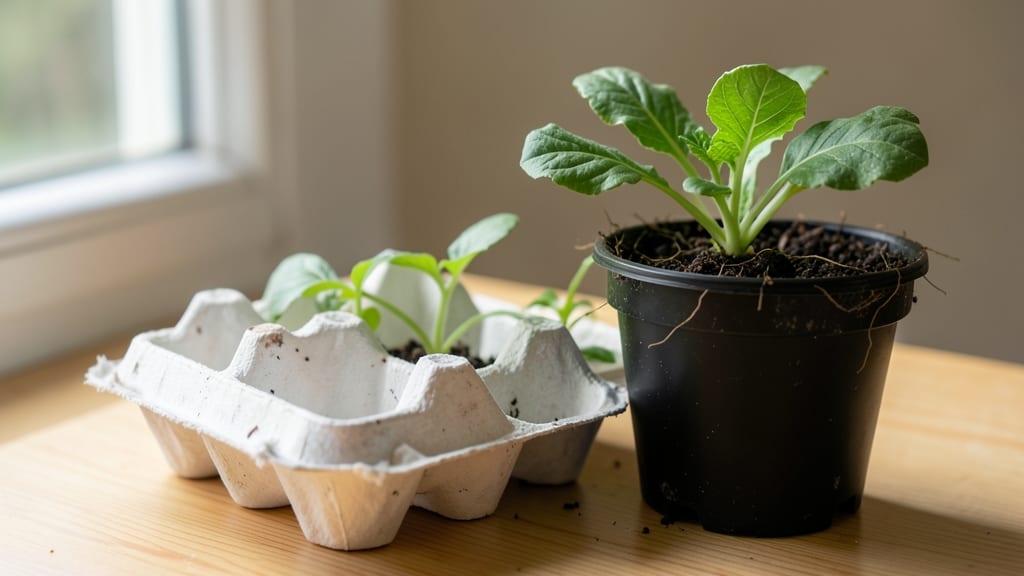
Yes, you can use egg cartons to start seeds—this eco-friendly method creates perfect biodegradable pots that nurture seedlings while eliminating transplant shock. Just poke drainage holes, fill with potting mix, plant seeds, and maintain moisture until germination.
Egg cartons work because their individual cells naturally mimic the ideal spacing for young plants, preventing overcrowding while allowing roots to develop freely. 🌱 The cardboard breaks down completely when transplanted, so seedlings go straight into the ground without root disturbance.
I've had great success with this method for delicate herbs like basil and leafy greens, where gentle handling is crucial during the early stages.
For best results, use cardboard cartons (not styrofoam) and place them in a seed tray to catch excess water. Once seedlings have 2-3 true leaves, you can plant the entire carton directly into soil—it'll decompose within weeks.
The key is keeping the mix consistently moist but not soggy to prevent mold, which is why I always pre-moisten the potting soil before planting.
💡 In This Article
- How Egg Cartons Support Seedling Growth
- Step-by-Step Egg Carton Seed Starting Guide
How egg cartons support seedling growth
Egg carton seed starters excel because their structure naturally replicates the ideal conditions for young plants. The individual cells provide perfect spacing—typically 1-2 inches wide—which prevents overcrowding while allowing roots to establish without competing for nutrients.
This mimics how professional seed trays work but with zero cost and maximum sustainability. The walls of the carton cells also create a microclimate that retains moisture longer than bare soil while still allowing air circulation, which is crucial for preventing fungal growth.
The biodegradable nature of cardboard cartons is where this method truly shines. When you transplant seedlings, you can simply place the entire carton into the soil—the cardboard will break down within 4-6 weeks, eliminating the need to disturb delicate roots.
Unlike plastic pots, there's no risk of root circling (where roots grow in tight circles around the pot edge), which often stunts plant growth. I've tested this with basil, lettuce, and marigolds, and the transplant shock is minimal because the roots remain intact in their natural growing medium.
Moisture retention is another key advantage. The thick cardboard material absorbs and holds water differently than soil alone, creating a consistent moisture gradient that's ideal for germination. However, this same property means you must be careful not to overwater—soggy cartons can lead to mold within 24-48 hours.
The solution? Use a spray bottle for gentle watering and always place your carton tray on a shallow dish to catch excess water, preventing root rot.
For aeration, the egg carton's structure allows oxygen to reach roots through the small gaps between cells, unlike solid blocks of soil. This is particularly beneficial for fine-rooted plants like herbs and leafy greens, which need consistent airflow to prevent anaerobic conditions (where roots suffocate from lack of oxygen).
The natural ventilation also helps regulate temperature fluctuations, keeping seeds in the optimal 65-75°F range for germination.
One often-overlooked benefit is the physical protection egg cartons provide for tiny seedlings. The walls shield delicate stems from strong air currents and accidental damage during handling. I've found this especially helpful with pepper and tomato seedlings, which are prone to snapping when transplanted.
The carton's structure acts like a built-in support system until the plant is strong enough to stand alone.
Finally, the eco-friendly aspect can't be ignored. Cardboard egg cartons are 100% compostable and require no additional materials to dispose of—unlike plastic pots that often end up in landfills.
This makes them an excellent choice for sustainable gardening, especially when you consider that over 2 billion egg cartons are discarded annually in the U.S. alone. 🌿