
Lawn
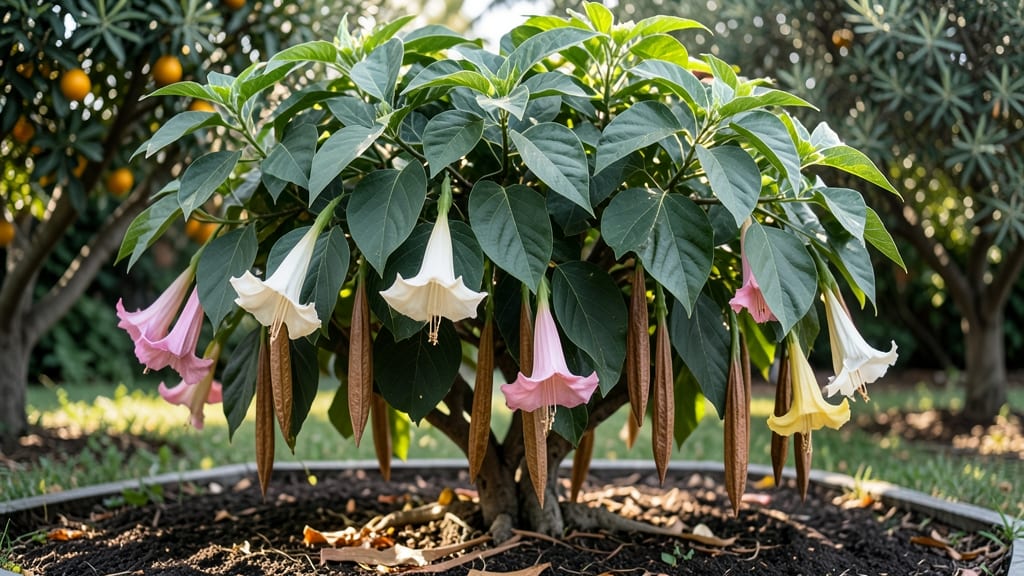
Harvesting Brugmansia seed pods turns your garden into a nursery. 🌱 These long, lantern-shaped pods crack open when ripe, revealing seeds that can grow into stunning angel’s trumpets. But timing is everything—harvest too early, and the seeds won’t germinate; wait too long, and they’ll scatter or mold.
The key is patience and observation. Pods turn from green to yellow-brown, then split open on their own. Once they’re dry and papery, gently twist them off the stem and collect the seeds inside.
Store them in a cool, dry place until planting season—viability lasts up to a year if kept dry. Germination can take 3-6 weeks, but don’t rush it. Keep seeds in a warm, moist environment (like a seedling tray with a humidity dome) and avoid overwatering.
Slow starters are normal—just stay consistent, and you’ll see those first green shoots pushing through. This method works for both gardeners with space and those growing in containers. The payoff? A head start on next year’s Brugmansia plants without the cost of cuttings.
Ready to turn those pods into a future garden? Let’s get started!
📚 In This Guide
- What you need
- Instructions
- Tips and common mistakes
- Wrapping up and next steps
What you need
- ● Mature Brugmansia Seed Pods: 10–20 fully dried, brown pods (harvest when they split open naturally).
- ● Pruning Shears: Sharp, sterilized shears (for clean pod removal).
- ● Paper Towels or Absorbent Cloth: 2–3 sheets (to blot excess moisture).
- ● Paper Bags or Envelopes: 5–10 breathable bags (for drying seeds).
- ● Small Sieve or Fine Mesh Screen: 1 (to separate seeds from chaff).
- ● Air-Tight Containers: 2–3 small jars or resealable bags (for long-term storage).
- ● Permanent Marker or Labels: 1 (to mark storage containers with date/plant variety).
- ● Gloves: Nitrile or garden gloves (brugmansia sap can irritate skin!).
- ● Desiccant Packs: 1–2 (for extra-dry storage environments).
- ● Digital Scale: (to weigh seeds for germination tests).
- ● Notebook: For tracking pod maturity and seed viability.
Step-by-Step instructions for harvesting brugmansia seed pods
Here’s how I collect and store brugmansia seeds with minimal fuss—no fancy tools required.
🌿 Step 1: Identify and Monitor Mature Seed Pods
Brugmansia pods start as small, green bulges that swell over 4-6 weeks until they turn yellow-brown and feel firm to the touch. I tap them gently with my fingernail—if they sound hollow (like knocking on a wooden door), they’re ready. Avoid harvesting when pods are still green or soft; they won’t contain viable seeds.
Watch for pods that hang downward and develop a papery texture. These are your targets. I mark them with a small piece of twine tied around the stem so I don’t miss them during weekly inspections. Brugmansia pods can drop suddenly, so check them every 2-3 days once they turn color.
✂️ Step 2: Harvest Pods at Peak Ripeness
Use clean, sharp pruning shears to snip the pod from the stem, leaving a ½-inch stub. Cutting too close risks damaging the plant’s energy flow, which can weaken next year’s blooms. I harvest on a dry morning—moisture on the pods can encourage mold during storage.
Place harvested pods in a paper bag (not plastic) to allow airflow. Store them in a cool, dry place (around 60-65°F) for 1-2 weeks. This mimics natural drying conditions and prevents premature seed spoilage. If pods split open before this time, remove the seeds immediately and dry them separately.
🌱 Step 3: Extract and Dry Seeds Properly
Once pods are fully dry, slit them open with a small knife and scoop out the seeds. Brugmansia seeds are large and flat, with a papery coating—don’t wash them, as moisture will ruin viability. Spread seeds in a single layer on a paper towel in a warm, dry spot (around 70°F) for 3-5 days until completely dry.
Test for dryness by gently pressing a seed—if it feels light and brittle, it’s ready. Store dried seeds in a sealed envelope with a silica gel packet to absorb any lingering moisture. Label with the harvest date and brugmansia variety (if known). Seeds stay viable for 2-3 years under these conditions.
🪴 Step 4: Store Seeds for Long-Term Viability
Place the sealed envelope in a dark, cool cabinet (like a pantry) away from heat sources. Brugmansia seeds are sensitive to temperature fluctuations, so avoid refrigeration unless your home gets very hot. I check stored seeds once a year—if they feel damp or develop mold, discard them immediately.
For extra security, I store a backup batch in the freezer (in a ziplock bag). Freezing halts aging, but thaw seeds slowly in the fridge before planting. Brugmansia seeds germinate best when fresh, so prioritize using seeds within 1 year for the highest success rate.
⏰ Step 5: Plant Stored Seeds When Ready
Sow seeds in spring after the last frost, when soil temperatures reach at least 65°F. Brugmansia thrives in warm conditions, so don’t rush planting—cold soil delays germination and weakens seedlings. I scarify seeds lightly with sandpaper to break their tough coating, then soak them in lukewarm water for 12 hours before planting.
Plant seeds ½ inch deep in well-draining soil and keep them moist but not soggy. Germination takes 2-4 weeks—patience is key. Once seedlings emerge, move them to bright, indirect light and harden off for 10 days before transplanting outdoors.
Tips & tricks for perfect brugmansia seed harvesting
Here's what I've learned from years of trial and error to make your brugmansia seed collection foolproof.
Pod Maturity Test: In Step 1, when checking pods for readiness, I've found that the hollow-sound test works best when pods are completely dry. If they're slightly damp, wait another day—they won't sound hollow until fully mature. This prevents harvesting seeds that won't germinate properly. I also check the stem attachment point—it should have a slight brown discoloration where it meets the pod.
Harvesting Technique: For Step 2, using clean pruning shears is crucial, but I've discovered that sterilizing them with rubbing alcohol before each cut prevents any potential mold transfer to your pods. The ½-inch stub isn't just about aesthetics—it helps the plant heal faster and prevents sap from dripping onto your pods during storage. I always harvest on dry mornings because any moisture can cause premature mold growth during the 1-2 week drying period.
Seed Drying Strategy: In Step 3, the single layer drying method is key, but I've learned to elevate the paper towel on a wire rack to ensure airflow reaches all sides. The 70°F temperature should be maintained consistently—any cooler and seeds may develop mold, any warmer and they can lose viability. I test dryness by gently pressing a seed between my fingers—if it crumbles easily, it's ready. The silica gel packet is non-negotiable for long-term storage.
Storage Environment: For Step 4, I've found that a dark pantry with stable temperatures works best, but I avoid refrigeration because brugmansia seeds don't tolerate temperature fluctuations well. The once-a-year check is essential—if you notice any condensation inside the envelope or musty smells, discard those seeds immediately. For the freezer backup, I use vacuum-sealed bags to prevent any moisture exposure during long-term storage.
Pro Tips for Brugmansia Seed Pods
- Here's what I've learned from years of trial and error to make your brugmansia seed collection foolproof.
- Pod Maturity Test: In Step 1, when checking pods for readiness, I've found that the hollow-sound test works best when pods are completely dry.
- Harvesting Technique: For Step 2, using clean pruning shears is crucial, but I've discovered that sterilizing them with rubbing alcohol before each cut prevents any potential mold transfer to your pods.
Frequently asked questions
Got questions about harvesting and storing brugmansia seed pods? You’re not alone! Here are some of the most common concerns—and their easy solutions.
When are brugmansia seed pods ready for harvest?
Harvest seed pods when they turn dry, papery, and brown—usually 6–8 weeks after flowering. Avoid picking them too early (green pods won’t yield viable seeds), but wait too long, and they’ll split open on their own. Pro tip: Tap the pod gently; if it rattles with seeds inside, it’s ready!
How long do brugmansia seeds stay viable for storage?
Freshly harvested seeds remain viable for 1–2 years if stored properly in a cool, dry place (like a sealed envelope or jar). For longer storage (up to 5 years), refrigerate them in a sealed container with a moist paper towel to maintain humidity. Warning: Brugmansia seeds lose viability quickly in heat or dampness!
Can I grow brugmansia from store-bought seeds?
Yes, but freshness matters! Store-bought seeds (especially from nurseries) may be older and less viable. For best results, stratify them (mix with damp sand, refrigerate for 4–6 weeks) before planting. If germination is slow, try bottom heat (70–75°F) to encourage sprouting.
Are brugmansia seed pods toxic like the plant?
Yes! All parts of brugmansia (including seed pods) contain toxic alkaloids that can cause nausea, hallucinations, or worse if ingested. Wear gloves when handling pods, and never consume them. Keep them away from pets and children. Safety first!
What if my seed pods mold or rot before drying?
Mold or rot usually means high humidity or poor airflow. To prevent this:
- Harvest pods early in the day when dew is lowest.
- Hang them in a shady, well-ventilated spot (like a mesh bag).
- Use a fan on low to speed drying.
Wrapping up and next steps
Harvesting brugmansia seed pods doesn’t have to be a stressful task—with the right timing, tools, and storage techniques, you can enjoy a year-round supply of viable seeds!
Whether you’re a seasoned gardener or just starting out, these pods offer a rewarding (and often overlooked) way to propagate your favorite plants. 🌱
Now that you’re armed with the knowledge to identify, harvest, and store these pods like a pro, why not take the next step? Experiment with germination methods or share your success with fellow plant enthusiasts. Happy growing—your garden (and future blooms) will thank you!