
Planting
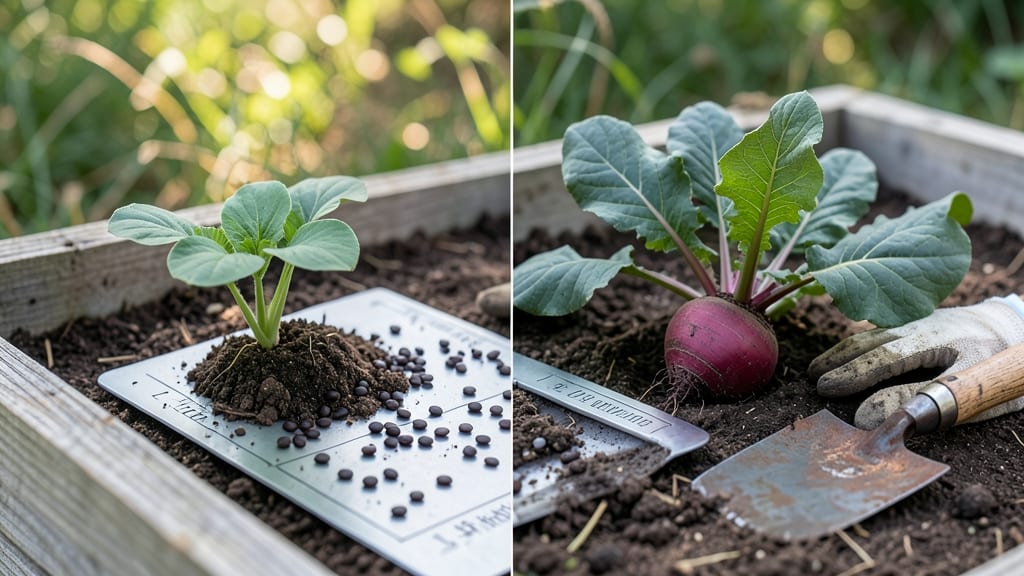
Beet seed spacing determines whether you end up with tiny, misshapen roots or plump, earthy harvests that feed you all summer. 🌱 I learned the hard way that cramming seeds together leads to competition—not more beets.
The secret lies in giving each seed its own space to grow, which means planting them 1-2 inches apart in rows spaced 12-18 inches apart. Soil prep is just as critical as spacing—loose, well-draining earth prevents crowding stress.
Amend heavy clay with compost before sowing, and avoid planting where beets grew last year to prevent disease buildup. Thin seedlings to the proper spacing when they’re 2-3 inches tall, using sharp scissors to avoid damaging roots.
When done right, your beets will develop bold, round shapes with tender greens for salads. Proper spacing also reduces pest pressure by improving airflow, and you’ll harvest 30-50% more than if you’d planted too close. The payoff? Fewer scraggly roots and more consistent yields.
This method works for both detroit-style and long, cylindrical varieties, and it’s foolproof for beginners. Once you master spacing, you’ll never go back to guessing again—just consistent, high-quality harvests every time.
📚 In This Guide
- What you need
- Instructions
- Tips and common mistakes
- Wrapping up and next steps
What you need
- ● Beet Seeds: Certified organic or heirloom seeds (e.g., Detroit Dark Red, Golden Beet, or Chioggia). Aim for 1–2 oz per 100 ft of row.
- ● Garden Soil: Well-draining, loose loam with a pH of 6.0–7.0. Amend with compost if needed.
- ● Planting Tools: Hand trowel or seed spacing tool (for precision).
- ● Garden rake (for leveling soil).
- ● Measuring tape or spacers/stakes (to mark rows and spacing).
- ● Watering Supplies: Watering can with a fine rose nozzle or drip irrigation setup.
- ● Mulch: Straw or shredded leaves (1–2 inches) to retain moisture.
- ● Seedling trays (for starting indoors 4–6 weeks before last frost).
- ● Row covers or floating row covers (to protect young seedlings).
- ● Organic fertilizer (e.g., fish emulsion or compost tea) for nutrient boost.
- ● Plant labels (to track varieties and spacing).
Step-by-Step guide to perfect beet seed spacing
Here's how I ensure every beet seed gets the room it needs for robust, uniform growth.
🌱 Step 1: Prepare the Soil for Optimal Germination
Loosen the top 6 inches of soil with a garden fork or tiller until it crumbles easily between your fingers. Beets prefer loose soil that lets roots spread without resistance. Work in a 1-inch layer of compost to improve drainage and provide early nutrients—beets are heavy feeders and won't tolerate compacted soil.
Rake the area smooth to create a fine seedbed. Press down lightly with your hands to eliminate air pockets, which can cause uneven germination. The soil should feel firm enough to hold a seed's shape but still soft enough to push a finger in easily. This prep ensures roots can penetrate deeply without struggling.
🌱 Step 2: Plant Seeds at the Correct Depth and Spacing
Use a ruler to mark rows 12 inches apart—this gives beet plants enough space to mature without crowding. Drop seeds every 1-2 inches apart along the row, pressing them just ½ inch deep into the soil. Beets have tiny seeds, so I like to use a seed spacing tool or even a toothpick to create precise holes before dropping them in.
Cover seeds lightly with soil and mist the area gently with water until the surface looks uniformly damp. Overwatering here can bury seeds too deeply, delaying germination. You'll see tiny sprouts in 7-14 days—wait until they reach 2 inches tall before thinning to avoid disturbing roots.
🌿 Step 3: Thin Seedlings for Maximum Root Development
When seedlings have 2-3 true leaves (the second set after the initial seed leaves), use sharp scissors to snip unwanted plants at soil level. Leave the strongest seedling every 3-4 inches in the row—this spacing prevents competition and ensures each beet develops a full, marketable root. I always thin on a cloudy day to reduce stress on the remaining plants.
Pull weeds immediately after thinning, as they compete aggressively with young beets. Mulch with 1-2 inches of straw or shredded leaves to retain moisture and suppress weeds. Beets need consistent soil moisture, so check the top inch daily—water when it feels dry to the touch, aiming for 1 inch of water per week.
☀️ Step 4: Monitor Light and Adjust for Bushy Growth
Beets thrive in full sun (6+ hours daily), but they'll bolt (go to seed) quickly in hot climates. If temperatures rise above 80°F, provide afternoon shade with a lightweight row cover. You'll notice leaves turning red or flowering too early—this means it's time to adjust shading or harvest soon.
Rotate plants a quarter turn weekly so they grow toward the sun evenly. Uneven sunlight causes lopsided roots, which reduces yield quality. Harvest when beets reach 2-3 inches in diameter for tender, sweet roots—waiting too long makes them woody and tough.
Tips & tricks for perfect beet seed spacing
Precision planting isn't just about following numbers—it's about creating the ideal conditions for every seed to thrive. Here's what I've learned after years of trial and error in my garden.
Soil Texture is Everything: In Step 1, when you're loosening that top 6 inches of soil, don't stop at "loose"—aim for soil that crumbles like cake crumbs when you squeeze it. I've found that adding a handful of perlite to that 1-inch layer of compost creates tiny air pockets that prevent soil compaction. This is especially important for beets, which develop long taproots that need unobstructed pathways. Think of it as creating a fluffy nest for each seedling to grow into.
Precision Tools Make All the Difference: For Step 2's 1-2 inch spacing, I've stopped using my fingers entirely. A simple seed spacing tool or even a toothpick works better than my eye—and saves me from replanting too-close seeds later. Pro tip: Mark your 12-inch rows with a straight piece of wood or a garden hose laid flat. This creates perfectly straight lines that make thinning in Step 3 much easier. I've seen gardens where rows wander, and those always have uneven growth patterns.
Thinning on a Cloudy Day is Non-Negotiable: When you're ready to thin in Step 3, don't do it on a sunny afternoon. The stress from both the thinning process and direct sunlight can shock young seedlings. I've watched plants wilt dramatically after thinning in full sun—only to recover beautifully when thinned on overcast days. This is particularly important when you're leaving those 3-4 inch gaps between plants, as each remaining seedling will need all its energy for root development.
Watering Wisdom for Consistent Moisture: That 1 inch of water per week in Step 3 isn't about timing—it's about technique. Use a rain gauge or tuna can to measure exactly 1 inch of water, and apply it slowly to avoid runoff. I've learned that shallow watering encourages roots to stay near the surface, while deep watering (about 1 inch per week) pushes roots downward, creating stronger plants. For even distribution, water in the morning so the foliage has time to dry before evening, reducing disease risk.
Pro Tips for Beet Seed Spacing
- Precision planting isn't just about following numbers—it's about creating the ideal conditions for every seed to thrive.
- Soil Texture is Everything: In Step 1, when you're loosening that top 6 inches of soil, don't stop at "loose"—aim for soil that crumbles like cake crumbs when you squeeze it.
- Precision Tools Make All the Difference: For Step 2's 1-2 inch spacing, I've stopped using my fingers entirely.
Frequently asked questions
about beet seed spacing can help you avoid common pitfalls and optimize your harvest. Here are answers to the most common queries:What’s the ideal beet seed spacing for home gardens?
For bush beets, space seeds 1–2 inches apart in rows 12–18 inches apart. For long-rooted varieties, thin seedlings to 3–4 inches apart once they sprout. Overcrowding leads to small, misshapen beets.
When is the best time to thin beet seedlings?
Thin seedlings to the correct spacing when they’re 2–3 inches tall (about 3–4 weeks after planting). Use sharp scissors to avoid disturbing roots. Wait until true leaves appear—this ensures stronger survivors.
Can I plant beet seeds too close together?
Yes! Overcrowded beets compete for nutrients, resulting in small, woody roots and poor yields. If you’ve already planted too close, thin aggressively or transplant excess seedlings to another bed with proper spacing.
Does beet seed spacing change in hot climates?
In hotter regions, increase spacing to 4–6 inches between plants to improve airflow and reduce disease risk (like leaf spot). Mulch heavily to retain moisture and prevent bolting—beets hate heat stress!
What if I don’t have enough space? Can I grow beets in containers?
Use 5–6 inch pots for 1–2 plants per container, spacing them 3–4 inches apart. Choose compact varieties like ‘Babybeat’ or ‘Detroit Dark Red’ for container success.
Wrapping up and next steps
Mastering beet seed spacing is your secret weapon for a thriving garden—bushier plants, fewer weeds, and a bountiful harvest are within reach! 🌱 Whether you’re planting rows or clusters, precision pays off, and your patience will soon be rewarded with vibrant, sweet beets.
Now that you’re armed with the right spacing techniques, grab those seeds and get planting—your future meals (and bragging rights) will thank you!
🔹 Next step: Mark your garden beds, prep the soil, and start sowing with confidence. Happy growing! 🌟