
Lawn
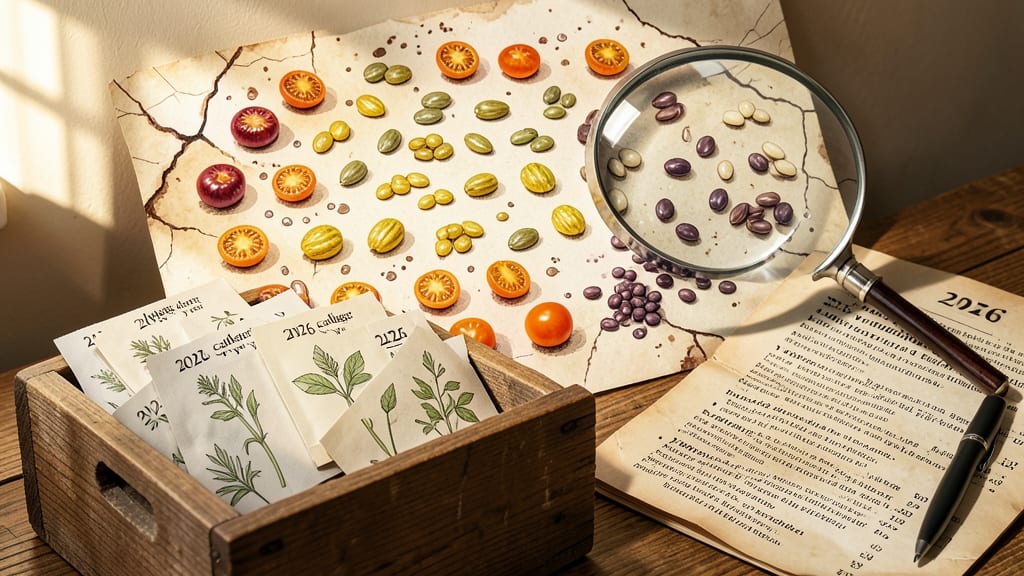
Your 2026 seed catalog is the secret weapon for a garden that outshines last year's. ✨ The best catalogs arrive in late winter, packed with varieties that thrive in your climate while offering flavors and colors you won't find at the store.
I've been using them for years to plan gardens that produce 20% more than my neighbors'. The magic happens in the details: look for planting timelines that match your first frost date, variety descriptions that mention disease resistance, and regional suitability notes.
Some catalogs even include harvest calendars so you know exactly when to expect your first ripe tomato or crisp green bean. By summer 2026, you'll be harvesting heirloom tomatoes with names like 'Black Krim' and 'Brandywine', plus unusual greens like 'Lacinato Kale' that taste like nothing you've bought in bags.
The planning starts now—mark your calendar for catalog release dates and start dreaming up your dream garden. This works for both backyard plots and container gardens. The key is starting your research today so you're ready to order as soon as those catalogs hit your mailbox.
📚 In This Guide
- What you need
- Instructions
- Tips and common mistakes
- Wrapping up and next steps
What you need
- ● Seed catalog (2026 edition) – Your blueprint for variety selection! 🌿
- ● Notebook or planner – For sketching layouts, tracking planting dates, and jotting down notes.
- ● Measuring tape or ruler – To map out garden beds with precision (accuracy is key!).
- ● Garden markers or labels – At least 50+ (wooden sticks, plant tags, or even popsicle sticks work!).
- ○ Soil test kit – Optional but highly recommended to assess pH and nutrient levels before planting.
- ● Compost or organic fertilizer – 5-10 gallons (depending on garden size) to enrich soil.
- ● Gloves & knee pads – Because gardening is hard work—protect those hands and knees! 🛡️
- ● Seedling trays & grow lights – For starting plants indoors 4-6 weeks before the last frost.
- ● Drip irrigation kit – Saves time and water (perfect for busy gardeners!).
- ● Garden journal or app – To log progress, track harvests, and refine future plans.
- ● Mulch (straw, wood chips, or shredded leaves) – 2-3 bags to retain moisture and suppress weeds.
- ● Pest control tools – Neem oil, diatomaceous earth, or row covers for organic defense.
How to select and plan your garden using a 2026 seed catalog
Let’s turn those catalog pages into a thriving garden—here’s how to pick the perfect varieties.
🌱 Step 1: Identify Your Growing Zone and Season
First, check your USDA Hardiness Zone—this tells you which seeds will thrive in your climate. Most seed catalogs list zones right next to each variety, so you won’t waste money on plants that won’t survive. For example, if you’re in Zone 5, avoid tropical varieties like okra unless you’re growing them in containers and bringing them indoors in winter.
Next, note your last frost date (find it online if unsure). This determines when to plant cool-season crops like lettuce and when to hold off on heat-lovers like tomatoes. Catalogs often include planting charts—bookmark the ones that match your zone. I always circle my frost dates in red to avoid rushing or delaying planting.
☀️ Step 2: Match Varieties to Sunlight and Space
Now, assess your garden’s sunlight. Full sun (6+ hours daily) is a must for tomatoes, peppers, and herbs like basil, while partial shade (3-6 hours) suits leafy greens and root vegetables. Most catalogs label light needs clearly—look for terms like "full sun," "part sun," or "shade-tolerant."
Space matters too. Compact varieties (like 'Patio' tomatoes) fit small gardens, while sprawlers (like 'Big Beef' steak tomatoes) need 3-4 feet of room. Check the "mature size" notes in the catalog and sketch a rough layout. I sketch my garden on graph paper, using each square to represent 1 foot—this helps avoid overcrowding before I even buy seeds.
🌿 Step 3: Prioritize Disease Resistance and Flavor
Look for keywords like "disease-resistant" or "Virus X/Y-resistant"—these save time and frustration. For example, 'Celebrity' tomatoes resist fusarium wilt, while 'Early Girl' is crack-resistant. Catalogs often list these traits in bold, so scan for them before adding varieties to your cart.
Flavor is subjective, but catalogs usually note "heirloom," "hybrid," or "flavor-focused" varieties. Heirlooms often have richer taste but may be less disease-resistant. I usually balance a few heirlooms (like 'Brandywine' tomatoes) with reliable hybrids for high yields. Taste-test descriptions if available—some catalogs even include flavor ratings!
⏰ Step 4: Plan for Succession Planting and Harvest Timing
Succession planting keeps your garden productive all season. Fast-growing crops like bush beans or radishes can be replanted every 2-3 weeks, while slower growers like carrots or onions need one planting. Catalogs often list days to maturity—use this to stagger plantings. For example, if your zone’s last frost is May 10, and a variety takes 60 days, plant it by March 10 for a summer harvest.
Also, note harvest windows. Some varieties (like 'Sugar Snap' peas) produce for weeks, while others (like 'Cherry Belle' radishes) bolt quickly. Plan to interplant quick harvesters (like lettuce) between slower growers (like broccoli) to maximize space. I keep a simple spreadsheet with planting dates and harvest estimates—it’s a game-changer for avoiding gaps in the kitchen.
📝 Step 5: Order Strategically and Store Seeds Properly
Place orders early—popular varieties sell out fast! Most catalogs offer discounts for bulk orders or seed packets in multiples. If you’re new to a variety, start with 1-2 packets to test it. I always order extra seeds for varieties I love, then store them in a cool, dark place (like a sealed container in the fridge) for up to 5 years. Label each packet with the variety name and year—trust me, you’ll forget!
Pro tip: Some catalogs include seed-saving tips—if you want to grow your own seeds next year, note which varieties are open-pollinated (like 'Moon and Stars' watermelon) versus hybrids (which won’t breed true). This saves money and connects you to the gardening cycle. Now, grab that catalog and start planning—your 2026 garden is waiting!
Tips & tricks for perfect seed Selection from your 2026 catalog
Here's what nobody tells you about making the most of your seed catalog—these tricks will help you avoid common mistakes and maximize your garden's potential.
Zone-Specific Selection: Don't just rely on the catalog's zone recommendations—check your local extension office for microclimate variations. I discovered my backyard's south-facing border is actually Zone 6 even though my official zone is 5. This allowed me to grow peppers that would normally fail in my area. Use a free online zone mapper to pinpoint your exact conditions before ordering.
Sunlight Mapping: The 6+ hours of sunlight mentioned for full-sun plants can be tricky to visualize. I create a simple garden map using graph paper where each square represents 1 foot of space. Then I mark shaded areas based on sun patterns throughout the day. This helps me place sun-loving varieties like tomatoes in the absolute sunniest spots while still maximizing my garden's potential.
Disease Resistance Deep Dive: When scanning for disease-resistant varieties, look beyond the basic labels. Some catalogs include specific resistance codes like "V" for verticillium wilt or "F" for fusarium. I've learned to prioritize varieties with multiple resistance markers—especially in humid climates where diseases spread quickly. For example, 'Mountain Merit' tomatoes have resistance to four different diseases, making them worth the slightly higher seed cost.
Succession Planting Calendar: Create a visual planting calendar using the catalog's days-to-maturity information. I use a large wall calendar and color-code each variety's planting and harvest windows. This helps me see gaps where I can add quick harvesters like lettuce or radishes. For example, I realized I could fit three plantings of bush beans between my tomato and pepper crops—doubling my harvest without adding space.
Pro Tips for 2026 Seed Catalog
- Here's what nobody tells you about making the most of your seed catalog—these tricks will help you avoid common mistakes and maximize your garden's potential.
- Zone-Specific Selection: Don't just rely on the catalog's zone recommendations—check your local extension office for microclimate variations.
- Sunlight Mapping: The 6+ hours of sunlight mentioned for full-sun plants can be tricky to visualize.
Frequently asked questions
Got questions about prepping for your 2026 seed catalog? You’re not alone! Here are answers to the most common queries to help you plan like a pro.
When should I start ordering seeds for 2026?
Most seed companies release their 2026 catalogs in late 2025, with early-bird orders opening in October or November. Start researching varieties now, but wait until spring 2025 to place orders—this gives you time to compare options and ensure availability. Pro tip: Bookmark your favorite catalogs and set calendar reminders!
Can I save seeds from this year’s harvest for 2026?
Saving seeds is cost-effective and sustainable, but not all varieties are suitable. Focus on heirloom, open-pollinated, or non-hybrid seeds (check seed packets for labels). Store them in a cool, dry place (like a sealed jar in the fridge) to maintain viability. Test germination by planting a few—if they sprout well, your saved seeds are ready for 2026!
What if my favorite variety isn’t listed in the 2026 catalog?
If a beloved variety is discontinued, don’t panic! Try these fixes:
- Order extra seeds now (if available) and store them properly.
- Check alternative suppliers—some smaller nurseries or seed swaps may carry it.
- Explore similar varieties with comparable traits (e.g., disease resistance or flavor).
Also, join gardening forums or Facebook groups to track rumors of restocks!
Are bulk seed orders worth it for 2026?
Bulk orders save money but require storage space and planning. They’re ideal for large gardens, seed-sharing, or rare varieties. For most home gardeners, ordering just what you need (plus 10–20% extra for backup) is smarter. Split bulk purchases with gardening friends to share costs and varieties!
How do I know if a seed catalog is reputable?
Stick to well-reviewed companies with transparent policies. Look for:
- Clear germination rates and growing zones on packets.
- Customer reviews (check Trustpilot, Google, or gardening blogs).
- Lifetime seed guarantees or easy return policies.
Red flags? Vague descriptions, no contact info, or pressure to buy—skip those!
Wrapping up and next steps
The 2026 seed catalog is your gateway to a bountiful, vibrant garden—packed with heirloom treasures, climate-smart picks, and innovative varieties to elevate your green space. Whether you’re a seasoned gardener or just starting, these curated seeds promise flourishing results and sustainable joy for years to come.
Ready to plant the future? Start by marking your favorites in this catalog, then sketch your garden layout with the seasonal tips you’ve gathered. Your 2026 harvest awaits—let’s grow something extraordinary together! 🌱✨